

Subtotal $0.00


 24 Hour At Your Services
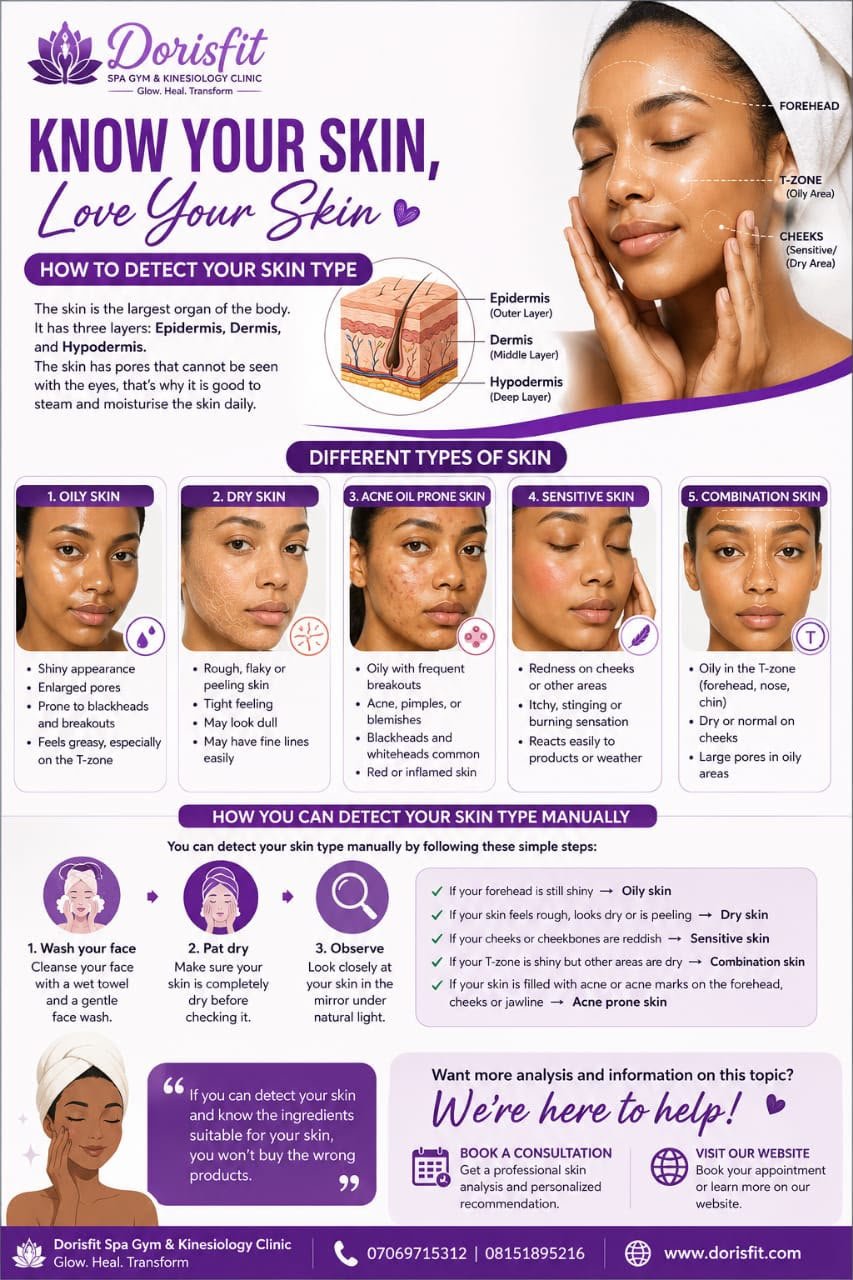
Type: A Complete Beginner’s Guide
Healthy skin starts with understanding your skin type.
Many people spend money on skincare products that don’t work simply because they are using products that aren’t suitable for their skin.
Once you know your skin type, you can choose the right ingredients and treatments that will help your skin look and feel its best.
The Skin – Your Body’s Largest Organ
The skin is the largest organ of the human body.
It serves as a protective barrier against bacteria, pollution, and harmful UV rays. It is made up of three main layers:
Epidermis – The outer layer that protects your body.
Dermis – The middle layer that contains collagen, elastin, blood vessels, and hair follicles.
Your skin also contains thousands of tiny pores that are too small to be seen with the naked eye.
These pores release oil and sweat, which is why it is important to cleanse, steam (when appropriate), and moisturise your skin regularly to maintain healthy skin.
Different Types of Skin
- Oily Skin
Shiny appearance, especially on the forehead, nose, and chin (T-zone).
Enlarged pores.
More likely to develop blackheads, whiteheads, and acne. - Dry Skin
Feels rough or tight.
May appear flaky or peeling.
Often looks dull and lacks moisture. - Acne-Prone Skin
Frequent pimples or breakouts.
Acne marks or blemishes on the forehead, cheeks, or jawline.
May be oily or combination skin. - Sensitive Skin
Easily becomes red or irritated.
May sting or burn when using certain skincare products.
Can react to weather, fragrances, or harsh ingredients. - Combination Skin
Oily in the T-zone (forehead, nose, and chin).
Dry or normal on the cheeks.
Requires products that balance both oily and dry areas.
How to Detect Your Skin Type at Home
Follow these simple steps:
Wash your face with a gentle facial cleanser and lukewarm water.
Pat your skin dry with a clean towel.
Do not apply any skincare products.
Wait for 30–60 minutes.
Observe how your skin looks and feels.
What to Look For
Your forehead and nose become shiny: You likely have oily skin.
Your skin feels tight, rough, or starts peeling: You likely have dry skin.
Your cheeks become red or easily irritated: You may have sensitive skin.
Your T-zone is oily while your cheeks feel dry: You likely have combination skin.
You notice frequent pimples, clogged pores, or acne marks: You may have acne-prone skin.
Why Knowing Your Skin Type Matters
When you understand your skin type, you can choose the right skincare products and ingredients. This helps you avoid wasting money on products that are unsuitable for your skin and increases your chances of achieving healthy, glowing skin.
If you’re unsure about your skin type or would like a professional assessment, we’re here to help.
Book a professional skin analysis with Dorisfit Spa Gym & Kinesiology Clinic today.
🌐 Website: www.dorisfit.com
Let us help you understand your skin and recommend the best treatments and skincare routine for your unique needs.