

Subtotal $0.00


 24 Hour At Your Services
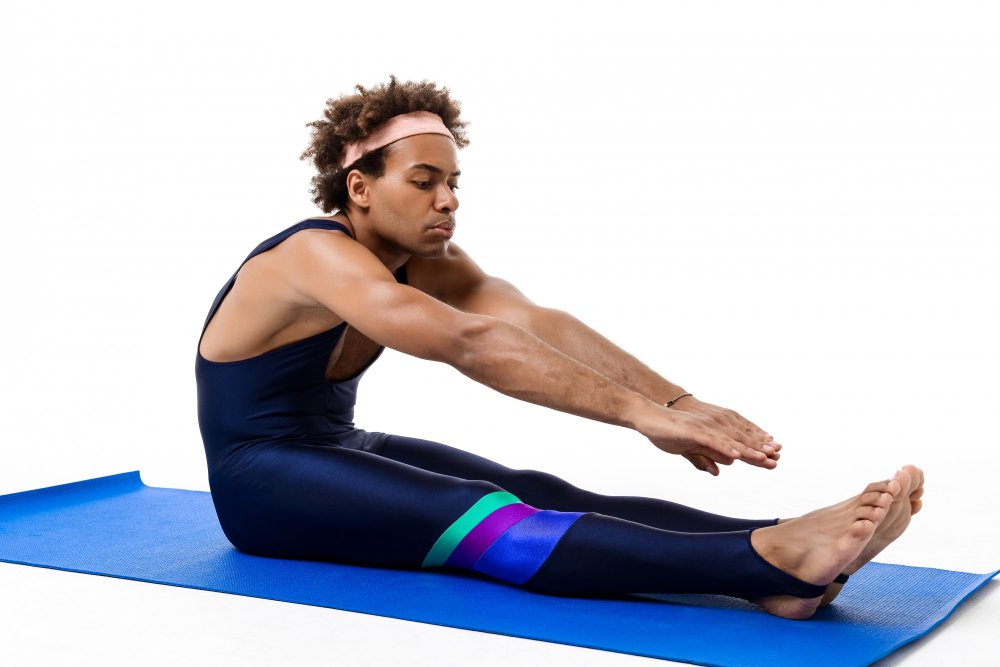
The Ultimate Flexibility Guide: 10 Best Daily Stretches From Dorisfit Spa
In our fast-paced routines, we often subject our bodies to hours of static stress. Whether you are sitting at a desk, commuting, or lifting heavy loads, muscles naturally tighten up, leading to joint stiffness, poor posture, and nagging aches.
At Dorisfit Spa, we believe that professional bodywork works best when paired with mindful daily movement. While our specialized therapeutic massages release deep, stubborn knots, a dedicated stretching routine keeps your muscles long, pliable, and resilient.
Below is our master list of the 10 best stretching exercises curated by our wellness experts to restore your mobility, protect your joints, and help you live pain-free.
Part 1: Stretches for Back & Spine Relief
1. The Cat-Cow Stretch
- Target Area: Entire spine, neck, and torso.
- Why it works: This gentle fluid movement improves spinal flexibility, decompresses the vertebrae, and stimulates blood flow to the surrounding soft tissues.
- How to do it: Begin on your hands and knees in a tabletop position. Inhale as you drop your belly toward the floor, lift your chest, and look slightly upward (Cow). Exhale as you arch your back toward the ceiling, tucking your chin toward your chest and drawing your belly button in (Cat). Alternate smoothly for 10 to 12 breath cycles.
2. Child’s Pose (Balasana)
- Target Area: Lower back, latissimus dorsi (mid-back), and hips.
- Why it works: It acts as a passive traction exercise, gently elongating the lower back muscles and taking the pressure off compressed discs.
- How to do it: Kneel on the floor, touch your big toes together, and sit back on your heels. Separate your knees about hip-width apart. Fold forward from the hips, extending your arms straight out in front of you on the floor. Lower your torso between your thighs and rest your forehead on the ground. Hold and breathe deeply for 30 to 60 seconds.
3. Sphinx Pose
- Target Area: Upper-to-mid back extension and chest opening.
- Why it works: It counteracts the chronic forward-slouching posture caused by phone and computer screens by safely strengthening and extending the thoracic spine.
- How to do it: Lie flat on your stomach with your legs extended behind you. Place your elbows directly under your shoulders, forearms flat on the mat parallel to one another. Press your palms firmly into the ground and lift your chest forward and upward. Keep your shoulders rolled down and back, away from your ears. Hold for 30 seconds.
Part 2: Stretches for Hips & Lower Body
4. The Figure-4 Glute Stretch
- Target Area: Gluteus max/medius, piriformis, and outer hips.
- Why it works: A tight piriformis muscle can compress the sciatic nerve, triggering deep lower back and leg pain. This stretch directly targets and opens that high-tension zone.
- How to do it: Lie on your back with your knees bent and feet flat on the floor. Cross your right ankle over your left knee, creating a “4” shape. Reach both hands through the opening to grab the back of your left thigh. Gently pull your left leg toward your chest until you feel a deep stretch in your right hip. Hold for 30 seconds, then switch sides.
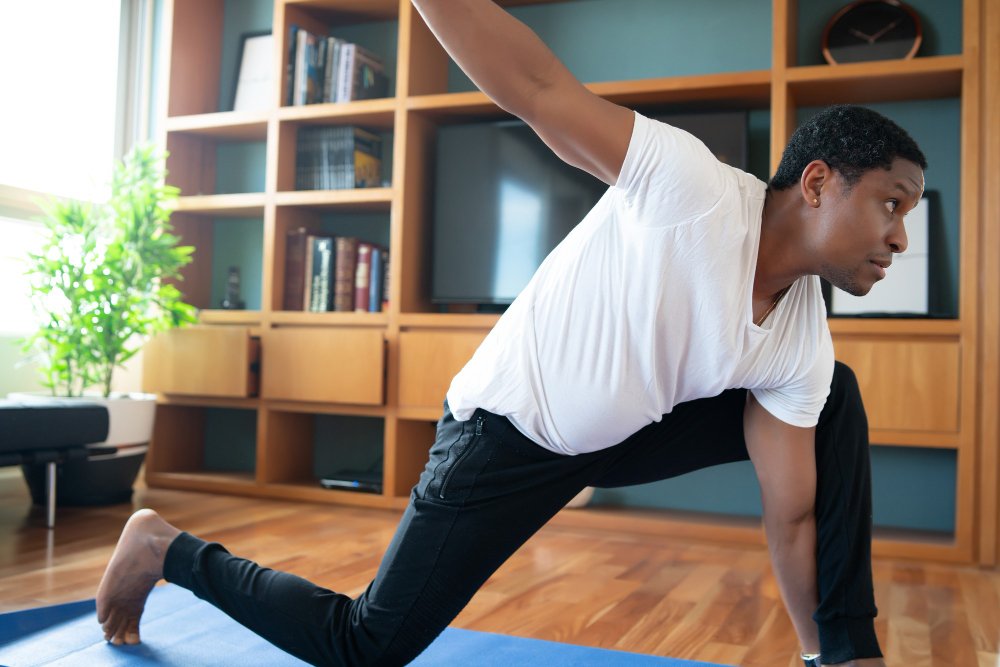
5. Kneeling Hip Flexor Stretch
- Target Area: Iliopsoas (hip flexors) and quadriceps.
- Why it works: Extended sitting forces your hips into a constant bent position, shortening the hip flexors. This pulls forward on your pelvis and creates severe strain on the lower back.
- How to do it: Step into a forward lunge, dropping your back knee down to the floor. Keep your torso upright and engage your core. Gently shift your pelvis forward until you feel a deep, controlled stretch along the front of your rear hip. For an added stretch, raise the arm on your resting knee side straight up. Hold for 30 seconds per side.
6. The Pigeon Pose (Modified)
- Target Area: Deep hip rotators, groin, and psoas.
- Why it works: It provides a comprehensive opening for the entire pelvic bowl, releasing emotional and physical stress trapped in the lower body.
- How to do it: From a tabletop position, slide your right knee forward toward your right wrist. Angle your right shin slightly inward. Extend your left leg straight back behind you, keeping your hips square to the floor. If comfortable, lower down onto your forearms. Modification: If this hurts your knees, practice this on an elevated surface like a bed or a sturdy chair. Hold for 30 to 45 seconds on each side.
Part 3: Stretches for the Chest, Shoulders, & Neck
7. Doorway Chest Stretch
- Target Area: Pectoralis major and minor (chest) and anterior shoulders.
- Why it works: Rolled-forward shoulders restrict lung capacity and strain upper back muscles. Opening the chest allows the shoulder blades to rest naturally on the ribcage.
- How to do it: Stand in an open doorway. Raise your arms up so your elbows are bent at a 90-degree angle, placing your forearms firmly against the doorjambs. Slowly step one foot forward through the doorway until you feel a comfortable opening stretch across your chest and shoulders. Hold for 30 seconds.
8. Thread the Needle
- Target Area: Upper back (rhomboids), rear shoulders, and thoracic rotation.
- Why it works: It releases tight, bound-up knots between your shoulder blades and improves rotational mobility in your upper torso.
- How to do it: Start on your hands and knees. Lift your right arm straight up toward the ceiling, opening up your chest. Next, sweep your right arm underneath your left arm, sliding the back of your shoulder and your right cheek down to rest on the mat. Keep your hips lifted high. Hold for 30 seconds, then switch sides.
9. Upper Trapezium Neck Stretch
- Target Area: Upper neck, tops of shoulders, and base of the skull.
- Why it works: Alleviates tension headaches and stiffness built up from looking down at digital devices or holding tension in your shoulders.
- How to do it: Sit or stand with a tall spine. Drop your right shoulder down away from your ear. Gently lower your left ear toward your left shoulder. For a deeper stretch, place your left hand lightly on top of your head to guide it sideways (do not pull forcefully). Hold for 20 to 30 seconds, then repeat on the opposite side.
Part 4: The Ultimate Full-Body Finisher
10. Downward-Facing Dog
- Target Area: Hamstrings, calves, shoulders, and whole posterior chain.
- Why it works: It serves as a master stretch that unifies the upper and lower body, lengthening the entire backside of your skeleton simultaneously.
- How to do it: Start in a plank position with hands shoulder-width apart. Press firmly through your fingers, lift your hips high, and push your weight back, forming an inverted “V” shape with your body. Focus on reaching your tailbone toward the sky. Let your head hang heavily between your arms and gently press your heels toward the ground. Hold for 30 to 45 seconds.
Guidelines for Safe & Effective Stretching
To get the most out of your daily routine without causing accidental injury, keep these core rules in mind:
- Never Stretch Cold Muscles: Always warm up your body with 3–5 minutes of light movement (like a brisk walk or arm circles) before diving into static stretches.
- Breathe Continually: Never hold your breath. Inhale deeply through your nose and exhale fully through your mouth to signal your nervous system to relax the muscles.
- Avoid Pain: A proper stretch should feel like a deep, satisfying pull—never sharp, pinching, or electric. If it hurts, back out of the movement immediately.
Amplify Your Results at Dorisfit Spa
Stretching maintains the space in your body, but professional massage creates it. If your muscles feel too rigid or locked up to stretch comfortably, a deep tissue session, hot stone alignment, or trigger point therapy at Dorisfit Spa can break through those stubborn structural blockages.
Ready to pair your mobility routine with professional recovery? Book your next wellness session today or stop by our reception desk to let our certified therapists customize a care plan built specifically around your fitness and flexibility goals.